
Breathe London Origins
Breathe London was originally launched by the Environmental Research Group, then at King’s College London, in March 2015 as a network of sensors in the area around St Thomas’ hospital.
Breathe London Pilot
The Breathe London network started with a pilot scheme back in 2018. The project was convened by C40 Cities and the Mayor of London, with funding from the Children’s Investment Fund Foundation and Clean Air Fund.
The pilot scheme aimed to better understand the exposure of Londoners by testing the reliability and accuracy of a lower-cost stationary sensor network and providing hyperlocal data to the public. It consisted of serval elements including static sensors, wearable sensors and monitoring on Google cars.
The wearables element was delivered by the Environmental Research Group with school children wearing backpacks with built in sensors made by Dyson. As part of the package, we also brought the use of the name Breathe London.
The static sensor element was delivered by a consortium of experts led by the Environmental Defense Fund; 100 sensors were deployed across the city for a period of 2 years.
Data from the pilot scheme can be found here on the Breathe London Pilot website and further details can be found in the Breathe London Technical Report (Pilot Phase).
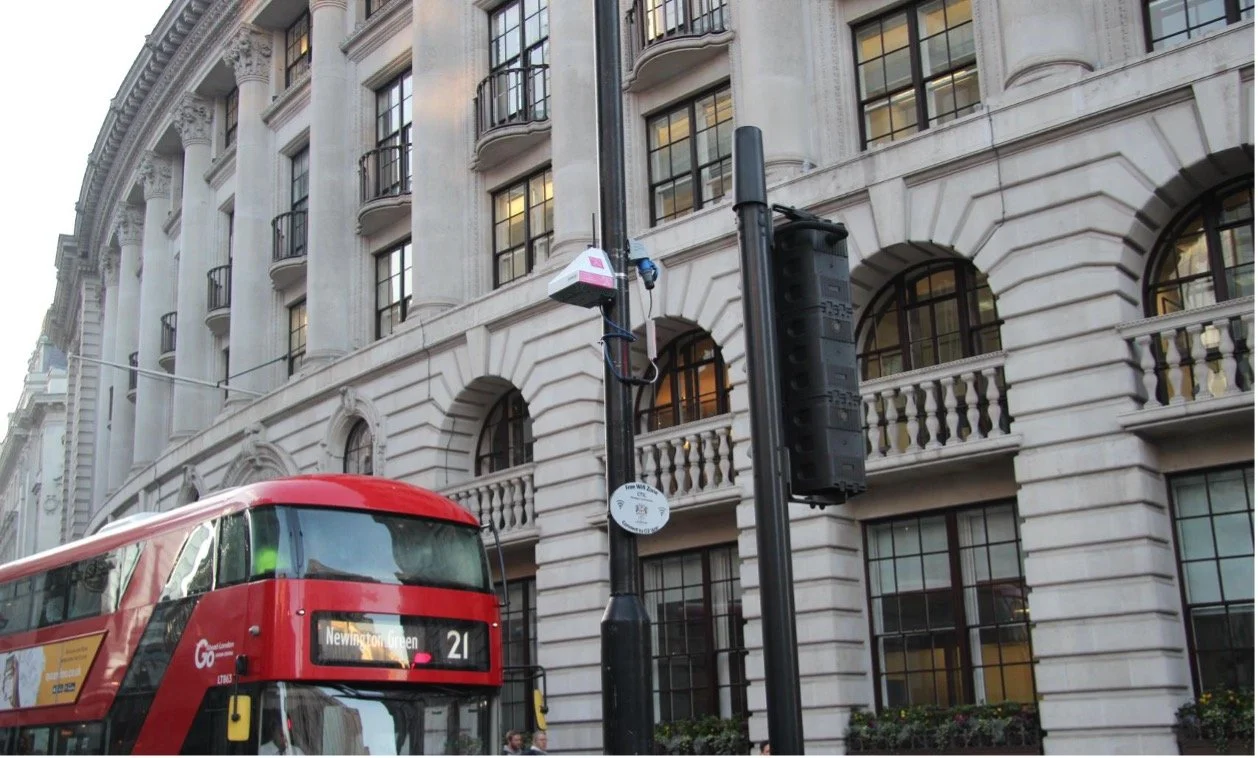
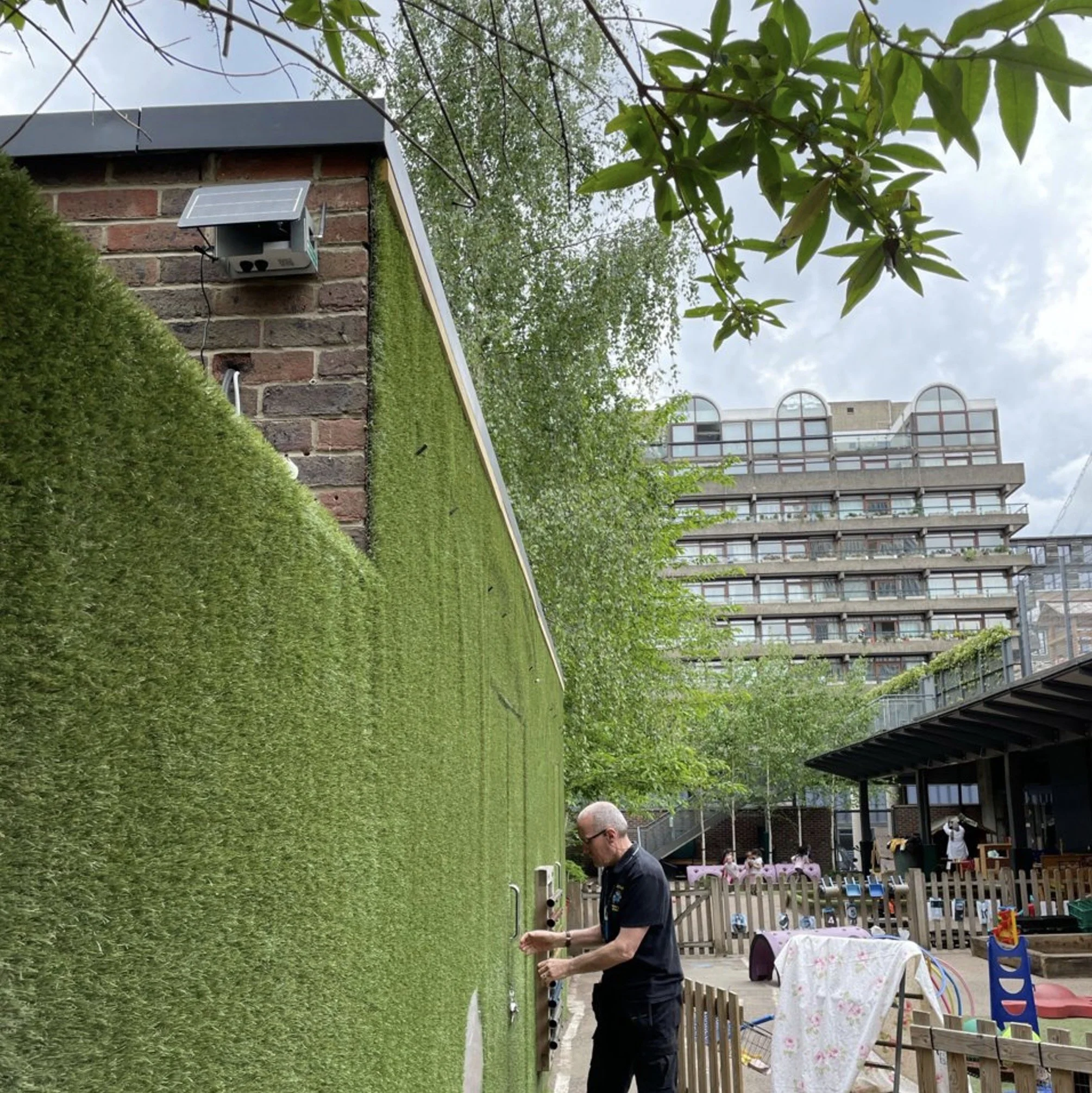
Breathe London Phase 1
Following the success of the pilot scheme, the Mayor of London and Bloomberg Philanthropies launched a new four-year project with the Environmental Research Group at Imperial College London to establish the next phase of Breathe London, providing over 100 new air quality sensors at priority locations including schools and hospitals. The new sensors, provided by Clarity, were also installed at numerous sites from London’s well established reference air quality monitoring network, providing ongoing calibration improving the accuracy of the network.
As part of this partnership, the Breathe London Community programme was established, distributing an additional 60 sensors for community groups. Selected groups, ranging from parents and residents associations to running clubs and local campaign groups, were given a sensor to host in their local community, empowering them to monitor local air pollution. Delivered by Imperial College London supported by The Social Innovation Partnership, communities also benefited from a dedicated engagement program. Sensors were also installed in six cultural institutions including the Science Museum and the Serpentine Gallery.
For the first time, Londoners were also able to “buy in” to the network through Imperial at a low cost and host sensors at locations of their choice. This revolutionised Londoners’ access to reliable data for schools, charities, businesses, individuals, NHS trusts and boroughs, and Imperial expanded the footprint of the network to over 450 locations at its peak.
Breathe London Phase 2
With the Breathe London model firmly established, the network has evolved into a collaborative, community focussed air quality monitoring network.
In June 2025 at London Climate Action Week, the Mayor of London and Bloomberg Philanthropies renewed their commitment to the program with a new phase of public engagement, including working groups for schools, hospitals, community groups, and local authorities, annual webinars and on-site training sessions.
This GLA phase is being delivered by a consortium of leading experts, convened by Vodafone, including Global Action Plan, Airly, Ricardo, Scotswold Ltd, Cambridge Environmental Research Consultants, and the University of Cambridge.
The consortium will deliver at least 146 sensors, including 10 on and around Oxford Street to monitor the impacts of the newly announced pedestrianisation scheme.
Imperial’s Breathe London Communities Network, as part of the joint initiative, is delivering monitoring to BIDS, businesses, property estates, local authorities, government agencies, hospitals, universities, campaign groups, charities and individuals, answering local questions for local communities.
The Breathe London Community Programme, funded by Bloomberg Philanthropies and Clean Air Fund, continues to be delivered by Imperial College London, as part of the Breathe London Communities Network, supported by The Social Innovation Partnership focused on empowering local communities and advocates.
In Phase 2, Breathe London Initiative is working to ensure robust air quality data is accessible for all Londoners.