
Ten Years of Campaigning for Cleaner Air in Brent
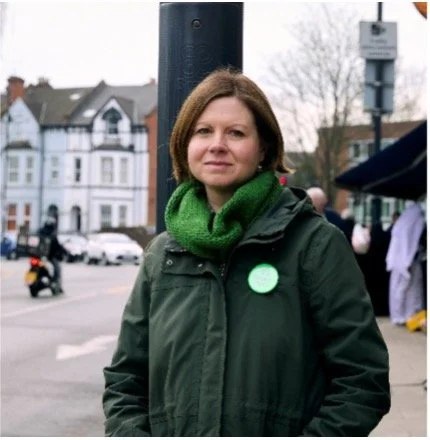
Reflections from Breathe London Community Programme member & Councillor Amandine Alexandre
This summer marks ten years since I first became involved in campaigning for cleaner air in Brent and across north-west London. Looking back, it feels like the right moment to reflect on what has changed, what we've achieved together, and what still needs to happen if we're serious about creating healthier neighbourhoods for everyone.
How It All Started
My journey into clean air campaigning began thanks to an opportunity I was given as a community volunteer with Transition Town Kensal to Kilburn. Our group was approached by an organisation that supplied diffusion tubes to measure air pollution across several neighbourhoods, including Queen's Park, Kensal Rise, Kensal Green and surrounding areas.
We placed the tubes in locations across north-west London, left them for several months, and then sent them away for analysis. When the results came back, many of us were genuinely shocked.
The cleanest air was found within Queen's Park itself, while some of the worst readings came from busy road junctions where traffic levels were particularly high. Across the areas we monitored, the overall picture was clear: the air we were breathing simply wasn't good enough.
Once we began learning more about the health impacts of air pollution, it became impossible to ignore. That work eventually contributed to the creation of Clean Air for Brent, a local campaign group that worked for several years to raise awareness and push for action on air quality.
Putting Air Quality on the Agenda in Harlesden
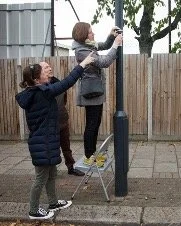
A major turning point came when I successfully applied for a Breathe Community Air Monitor while serving as a trustee of the Harlesden Neighbourhood Forum. Having a monitor installed on Harlesden High Street helped put air quality firmly on the local agenda.
We already knew that pollution levels were high. Harlesden experiences significant levels of heavy goods vehicle traffic, and the design of the High Street itself doesn't help. The narrow street, coupled with relatively tall buildings, can create conditions where pollution becomes trapped.
The monitor gave us something powerful which is evidence. To this day, it continues to provide a visible reminder that air quality remains a major public health issue. While air quality has improved across London in recent years, the data also reminds us that there is still work to do.
One area that particularly concerns me is particulate matter pollution. Based on the readings, we're not seeing the downward trend that we'd like, and that tells me we need a stronger plan for improving air quality in Harlesden and across Brent.
Bringing Clean Air Priorities into Local Politics
As one of nine Green Party councillors now serving in Brent, representing Kensal Green Ward, my experience as a clean air campaigner continues to shape my priorities.
One of the first things I realised when campaigning for better air quality was that school streets would play an important role in protecting children from pollution and creating safer journeys to and from school.
I spent years lobbying the council to introduce them. Today, Brent has significantly more school streets than it once did, particularly in the south of the borough, including Harlesden and Kensal Green. We are moving towards a future where every primary school can benefit from these protections.
That progress is encouraging, but there are still many issues that deserve greater attention. One concern that residents have increasingly raised with me is the impact of charcoal grill restaurants on local air quality. While traffic pollution often dominates the conversation, there are other sources of air pollution that can have significant impacts on nearby residents.
I want to better understand what powers councils currently must address these concerns and whether changes are needed at a London-wide or national level. If we truly want cleaner air, we need to address all sources of pollution, not just the most obvious ones.
Why the ULEZ Expansion Matters
Of all the achievements from the last decade, one stands out above the rest: the expansion of the Ultra Low Emission Zone (ULEZ).
I remember clearly when ULEZ was first introduced and Harlesden wasn't included. Even after the initial expansion, the boundary stopped at the North Circular Road. To me, that felt fundamentally unfair.
Children attending schools near the North Circular were still being exposed to some of the highest levels of air pollution, yet they weren't receiving the same protections as residents elsewhere in London. Alongside fellow campaigners, community groups and organisations such as Mums for Lungs, I campaigned strongly for a London-wide expansion. Many clean air advocates came together to make the case.
When London-wide ULEZ finally arrived in August 2023, it represented a major victory for public health. We now know it has helped improve air quality across the capital. While I believe there is still room for further improvements, particularly around the environmental impact of larger and heavier vehicles, the expansion remains one of the most significant clean air achievements of the last decade.
A Vision for Brent's Future
When people think about air pollution, one challenge is that we can't always see it, but we can feel its effects.
Many people notice this when they leave London and spend time somewhere with cleaner air. Breathing feels easier. Walking feels more enjoyable. The environment feels calmer. That experience shouldn't be something we only enjoy when we leave the city.
Creating cleaner air isn't just about reducing pollution levels. It's about creating neighbourhoods where people genuinely want to spend time. That means safer streets, more pedestrian crossings, better walking routes and much stronger cycling infrastructure. Brent still has a long way to go when it comes to protected cycle lanes. We need more investment and much greater ambition.
We also need to rethink how we design streets and public spaces. Too often, improvements happen only after serious incidents occur. Instead, we should be creating environments that encourage walking and cycling before problems arise.
Near where I live, the Council recently renovated a pedestrian and cycle path. The transformation has been remarkable. The addition of rain gardens, improved design features and simple additions such as seating has dramatically changed how people use the space. More people walk there. More people cycle there. More people spend time there.
For me, that's exactly the future we should be striving for across Brent. Cleaner air isn't a standalone issue. It's part of a bigger vision for healthier, greener and more welcoming neighbourhoods. After ten years of campaigning, that's still the vision I'm working towards every day.
You can connect with Amandine on Instagram via @Amandine.london